Immunohistochemistry (IHC)
We at AnaPath are well equipped for immunohistochemistry services that will provide you with optimal staining results. Either the automated staining with our Leica BOND-III systems or manual staining by our experienced technicians, both will ensure reliable and consistent results on your fresh frozen or FFPE samples. Our team of IHC specialists can validate and establish protocols for your required targets on a panel of various species (e.g. mouse, rat, rabbit, monkey, human, cat, guinea pig, frog or dog). For further information please contact our IHC team via ihc-group@anapath.ch or info@anapath.ch. Together we can find the best solution to provide you with an optimal staining result.
List of antibodies validated
Immune cell marker
| Marker | Target cell type / biological target | Validated species |
|---|---|---|
| Arg1 (liver arginase) | Macrophages, hepatocytes | Rat |
| Bcl6 | Germinal center B cells | Mouse, Human |
| BCMA | Plasma cells, multiple myeloma | Human |
| CD3 (CD3e) | Pan T cell | Mouse, Human |
| CD4 | T-helper cells, monocytes, macrophages, and dendritic cells. | Rat, Human, Monkey, |
| C4d | Antibody mediated rejection | Monkey |
| CD5 | Pan T cell, B cell malignancies | Mouse, Human |
| CD8 (CD8a) | Cytotoxic T cells, NK cell subset | Rat, Mouse, Human, Monkey |
| CD9 | Exosomes, extracellular vesicles | Human |
| CD11b | Macrophages, microglia | Rat, Mouse |
| CD16 | natural killer cells, granulocytes, activated macrophages and a subset of T cells | Human |
| CD19 | B cell, follicular dendritic cells | Rat, Human |
| CD20 | B cell | Human, Monkey |
| CD31 (PECAM-1) | Endothelial cell | Rat, Human, Sheep, Pig |
| CD38 | activated T cells, B cells, natural killer (NK) cells, monocytes, and macrophages. Normal and malignant plasma cells. | Human |
| CD40 | B cells, macrophages, dendritic cells, endothelial cells, and monocytes. | Rat |
| CD43 | T cells, myeloid cells (like granulocytes and monocytes), histiocytes, plasma cells, and platelets. | Human, Mouse |
| CD45 (LCA) | Pan leukocyte marker | Rat, Human |
| CD56 (NCAM1) | NK cells and NK lymphomas. neuromuscular junctions, neuroendocrine tissue, neurons, glia | Human |
| CD68 | mononuclear phagocyte lineage – macrophages, microglia, osteoclasts, tissue histiocytes, Kupffer cells, multinucleated giant cells, Langerhans cells, Hofbauer cells | Rat, Mouse, Human, Monkey |
| CD69 | Activated monocyte, lymphocyte and platelet | Rat, Human |
| CD80 (B7-1) | APC, activated B cell and T cell | Rabbit, Human, Pig |
| CD86 (B7-2) | activated B and T cells, macrophages, dendritic cells, and astrocytes | Rat |
| CD103 | hairy cell leukemia, tissue-resident memory T cells, and specific subsets of dendritic cells and regulatory T cells | Rat, Human |
| CD115 (CSF1R) | monocytes, macrophages, dendritic cells, and osteoclasts | Rat |
| CD137 | Activated T cells | Human |
| CD163 | Monocyte and macrophages | Rat, Human |
| CD170 (Siglec-F) | eosinophils and alveolar macrophages | Rat |
| CD204 (MSR1) | Macrophages and M2-polarized tumor-associated macrophages (TAMs) | Rat, Mouse |
| CD206 (Mannose receptor/MMR) | M2 macrophage | Rat, Rabbit, Human, Pig |
| CCR7 (CD197) | naïve T cells, central memory T cells, regulatory T cells, mature dendritic cells, and naïve B cells | Rat |
| CXCL10 | Chemokine-producing immune and epithelial/stromal cells; CXCL10/IP-10 | Rat, Human |
| FOXP3 | Regulatory T cells (Treg) | Human |
| F4/80 | Macrophages / mononuclear phagocytes, microglia (in rodents) | Rat, Mouse |
| Granzyme B | activated cytotoxic T lymphocytes (CTLs) and natural killer (NK) cells | Human, Guineapig |
| Iba-1 | Macrophages, microglia | Mouse, Human |
| IgG | Immunoglobulin G | Rat, Mouse, Rabbit, Human, Monkey, |
| IgM | Immunoglobulin M | Mouse, Rabbit, Monkey |
| LY6H | Pancreatic delta cells | Human, Monkey |
| MHC II | Antigen presenting cells | Rat |
| MPO (Myeloperoxidase) | Neutrophils, myeloid cells; neutrophilic inflammation | Mouse |
| PD-1 | activated T cells, B cells, natural killer (NK) cells, and myeloid cells | Human |
| PD-L1 | Solid tumors | Human, Monkey |
| TGF Beta 1 | Chronic inflammation, fibrosis | Human |
| TLR2 | Marker for innate immune response | Rat |
| Syndecan-1 (CD138) | Plasma cells, blood vessel | Rat, Mouse, Human |
| Tryptase | Mast cell activation | Pig |
Cytoskeleton and associated proteins
| Marker | Target cell type / biological target | Validated species |
|---|---|---|
| actin (pan) | Actin (all isoforms) | Human |
| α-SMA (ACTA2) | Smooth muscle cells, myofibroblasts, fibrosis | Rat, Mouse, Rabbit, Human, Pig |
| Claudin-1 | Epithelial barrier | Human |
| Cytokeratin 20 | Epithelial cells and carcinoma | Monkey |
| Desmin | myogenic (muscle) tissue differentiation and tumors originating from smooth, skeletal, or cardiac muscle | Rat |
| Desmoplakin | Desmosomes in epithelial cells / cardiomyocytes | Human, Monkey |
| ITGB1 (Integrin β1/CD29) | Basal keratinocytes / epidermal stem & progenitor cells, solid tumors | Human |
| Vimentin | mesenchymal cells and the epithelial-to-mesenchymal transition (EMT) | Mouse, Human |
Proliferation marker
| Marker | Target cell type / biological target | Validated species |
|---|---|---|
| BrdU | Marks DNA synthesis during S-phase of cell cycle | Rat, Mouse |
| Ki67 | All active phases of cell cycle | Mouse, Human |
| NG2 | Oligodendrocyte precursor cells, pericytes, melanoma cells | Human, Monkey |
Connective tissue marker
| Marker | Target cell type / biological target | Validated species |
|---|---|---|
| Aggrecan | Chondrocytes, hyaline cartilage extracellular matrix | Human |
| Collagen I | Fibroblasts, fibrous connective tissue extracellular matrix (e.g. skin) | Rat, Mouse, Rabbit, Human |
| Collagen II | Chondrocytes, hyaline cartilage extracellular matrix | Human, Rabbit |
| Collagen III | Reticular fibers, connective tissue extracellular matrix | Rat, Rabbit, Human |
| Collagen IV | Basement membranes / vascular basal lamina | Human |
| Collagen X | Hypertrophic chondrocytes, hypertrophic cartilage extracellular matrix | Human |
| Decorin | Fibrous connective-tissue extracellular matrix | Human |
| Elastin | Elastic fibers (arteries, lung, skin), elastic connective tissue extracellular matrix | Human, Monkey, Pig |
| Fibulin-5 | Elastic-fiber-rich extracellular matrix; vessel walls | Human |
| Hsp47 (SERPINH1) | Fibroblasts, collagen-producing cells | Rabbit, Human, Pig |
| Osteocalcin | Osteoblasts, bone extracellular matrix; bone formation | Mouse, Human |
| Versican | Interstitial connective tissue extracellular matrix (stroma, vessels and cartilage-like tissue) | Human |
Neuronal markers
| Marker | Target cell type / biological target | Validated species |
|---|---|---|
| ATF3 | Stress / injury-responsive cells; neuronal injury marker | Sheep |
| β-NGF | Neurons, neuronal survival, differentiation and axonal growth | Rabbit, Human |
| Calbindin | Purkinje cells, specific neuronal populations | Rat, Mouse |
| CD171 (L1CAM) | Neurons / axons, neural cell adhesion | Human |
| CGRP | Sensory neurons, sensory nerve fibers | Monkey |
| ChAT (choline acetyltransferase) | Cholinergic neurons / nerve fibers | Sheep |
| F4/80 | Microglia, macrophages / mononuclear phagocytes (in rodents) | Rat, Mouse |
| GFAP | Astrocytes; glial intermediate filaments | Rat, Mouse, Monkey |
| GluN1 (NMDAR1) | Neurons (expressing NMDA receptors), glutamatergic synapses | Human |
| Iba-1 | Microglia, macrophages | Rat, Mouse |
| Myelin based Protein (MBP) | Myelin sheaths / myelinating glial cells | Rat, Mouse, Sheep |
| CD56 (NCAM1) | Neurons,glia,neuromuscular junctions, neuroendocrine tissue, NK cells and NK lymphomas. | Human |
| Nestin | Neural stem / progenitor cells, immature neural cells | Rat |
| NeuN | Mature neurons | Monkey, Sheep |
| NF200 (NEFH) | Neurons, large myelinated axons | Rat |
| Periaxin | Schwann cells / peripheral myelin | Rat |
| PGP 9.5 (UCHL1) | Neurons, nerve fibers | Monkey |
Muscle fiber markers
| Marker | Target cell type / biological target | Validated species |
|---|---|---|
| α-SMA (ACTA2) | Smooth muscle cells, myofibroblasts, fibrosis | Rat, Rabbit, Human, Pig |
| Desmoplakin | Desmosomes in cardiomyocytes / epithelial cells | Human, Monkey |
| Myosin heavy chain (Type I, IIA, IIB) | Skeletal muscle fibers; fiber-type differentiation | Rat |
Neurological Receptors
| Marker | Target cell type / biological target | Validated species |
|---|---|---|
| GABA | GABAergic (inhibitory) neurons | Rat |
| NaV1.8 (SCN10A) | Nociceptive sensory neurons / nerve fibers | Sheep |
| Orexin receptor 1 (OX1R) | Orexin-responsive neurons | Human |
| Orexin receptor 2 (OX2R) | Orexin-responsive neurons | Human |
| Somatostatin receptor 2 (SSTR2) | SSTR2-positive neuroendocrine / neural cells (somatostatin-responsive cells) | Human |
| Somatostatin receptor 3 (SSTR3) | SSTR3-positive neuroendocrine / neural cells, primary cilia (somatostatin-responsive cells) | Human |
Inflammatory markers
| Marker | Target cell type / biological target | Validated species |
|---|---|---|
| IL-1 β | Activated macrophages / monocytes, inflamed tissue, inflammatory response | Rat |
| IL-6 | Activated immune and stromal cells, Inflamed tissue, inflammatory response | Rat |
| MPO (Myeloperoxidase) | Neutrophils, myeloid cells; neutrophilic inflammation | Human |
| TNF-α | Activated macrophages / immune cells; inflammatory response | Rat, Rabbit |
| VCAM | Activated vascular endothelium, leukocyte recruitment | Mouse |
| TNSF14 | Activated immune cells; inflammatory response | Rat |
Fetal markers
| Marker | Target cell type / biological target | Validated species |
|---|---|---|
| Oct-4 | Pluripotent stem / germ cells, stemness / pluripotency | Rat |
Transcription factors and associated proteins
| Marker | Target cell type / biological target | Validated species |
|---|---|---|
| FOXP3 | Regulatory T cells (Treg) | Human |
| FUBP1/FBP | Proliferating/metabolically active cells; transcriptional regulation | Mouse |
| HMGB1 | Various cell types; cellular damage / necrosis, inflammatory response | Rat, Human |
| Oct-4 | Pluripotent stem / germ cells, stemness / pluripotency | Rat |
| PAX8 | Thyroid, renal and Müllerian epithelial cells | Human, Monkey |
| PAX5 | B cells, B cell lineage | Rat, Mouse, Human |
| pSTAT4 | Activated T cells / NK cells; IL-12 / Th1 signaling | Human |
| STAT5 | Cytokine-responsive hematopoietic cells; JAK-STAT signaling | Mouse |
| SOX9 | Chondrocytes / chondroprogenitor cells; chondrogenesis | Rat, Human |
Hormones/growth factors / hormone receptors
| Marker | Target cell type / biological target | Validated species |
|---|---|---|
| Androgen receptor | Androgen receptor expressed mainly in epithelial cells, stromal cells and other androgen-responsive cells | Mouse |
| Calcitonin | Thyroid C cells (parafollicular cells); calcitonin-producing neuroendocrine cells | Rat, Cat |
| EGF | EGF-producing epithelial and other stromal cells; extracellular epidermal growth factor ligand | Mouse, Human |
| Estrogen receptor (ER) | Estrogen receptor in hormone-responsive epithelial and stromal cells | Rat, Mouse |
| FGF2 / bFGF | Fibroblasts, endothelial cells and other mesenchymal cells; FGF2 growth factor | Rat |
| FSH beta | FSH-producing pituitary gonadotrophs; FSH β-subunit | Human |
| FSH receptor | Granulosa cells in ovary and Sertoli cells in testis; FSH receptor | Human |
| Thyroglobulin | Thyroid follicular epithelial cells; thyroglobulin protein | Pig |
| Uteroglobin | Club/Clara cells of bronchiolar epithelium; secretory epithelial cells | Rat, Mouse |
| Vasopressin | Hypothalamic magnocellular neurons; vasopressin/ADH-producing neurons | Rat |
Tumor markers
| Marker | Target cell type / biological target | Validated species |
|---|---|---|
| Bcl-6 | Germinal-center B cells | Rat, Cat |
| BrdU | Proliferating cells undergoing DNA synthesis; incorporated into newly synthesized DNA | Rat, Mouse |
| Carbonic anhydrase IX (CAIX) | Mainly hypoxic tumor cells, particularly epithelial carcinoma cells | Human |
| CXCL10 | Chemokine-producing immune and epithelial/stromal cells; CXCL10/IP-10 | Human |
| EDB fibronectin | Tumor-associated stromal cells, fibroblasts, endothelial cells, and extracellular matrix; alternatively spliced fibronectin | Human |
| EGFR | Epithelial cells and tumor cells; epidermal growth factor receptor | Human |
| EMSY | Epithelial and tumor cells; DNA repair- and transcription-associated protein | Human |
| EpCAM | Epithelial cells and epithelial tumor cells; epithelial cell adhesion molecule | Human |
| ErbB2 / HER-2 | Epithelial/tumor cells; HER2 receptor tyrosine kinase | Human |
| IGF-1 | Hepatocytes and other IGF-1-producing cells; insulin-like growth factor 1 | Rat |
| NOS2 (iNOS) | Activated macrophages/monocytes, inflammatory cells and other cytokine-stimulated cells; inducible nitric oxide synthase | Rat |
| Lysyl oxidase | Fibroblasts, stromal cells and tumor-associated cells; extracellular matrix collagen/elastin cross-linking enzyme | Human |
| PROX1 | Transcription factor in lymphatic endothelial cells and specific neuronal and hepatic cell populations | Rat |
| S100B | Schwann cells, astrocytes and other neural/glial cells; calcium-binding protein | Rat |
| TNFSF14 | Mainly activated immune cells (T cells, NK cells, monocytes/macrophages) | Rat |
| PAX8 | Marker of thyroid, renal, and Müllerian epithelial cells | Human, Monkey |
| PAX5 | Marker of B cells and B cell lineage cells | Rat, Human, Mouse |
| p16 / CDKN2A | Cell-cycle inhibitor, increased in senescent and certain tumor cells | Rat, Human |
| p21 | Cell-cycle inhibitor in proliferating, stressed, or senescent cells | Rat, Human |
| RIPK1 | Tumor-suppressor protein; mainly epithelial and tumor cells | Rat, Human |
| p63 | Marker of basal and squamous epithelial cells and myoepithelial cells | Human |
| PSMA | Prostate epithelial and tumor cells; also expressed in tumor-associated neovasculature | Human |
| Rb1 | Retinoblastoma tumor-suppressor protein; broadly expressed in proliferating and non-proliferating cells | Rat |
| RIPK1 / RIP1 (phospho) | Immune and other tissue cells; regulator of inflammation, necroptosis, and cell death | Rat |
| RIPK3 | Cells undergoing/competent for necroptosis, particularly inflammatory and epithelial cells | Rat |
| Phospho- Rb1 | Proliferating cells; phosphorylated retinoblastoma protein associated with cell-cycle progression | Rat |
| P53-BP1 | DNA-damage response protein, particularly in cells with DNA double-strand breaks | Rat |
| TAG72 | Mucin-producing epithelial/tumor cells, especially adenocarcinoma cells | Human |
| WT1 | Marker of podocytes and mesothelial cells; also expressed in certain tumors | Human |
Infectious / Viral
| Marker | Target cell type / biological target | Validated species |
|---|---|---|
| Hemagglutinin | Cells containing influenza viral hemagglutinin; viral antigen | Human, Monkey |
| SARS-CoV-2 Spike | Cells containing SARS-CoV-2 spike protein/viral antigen | Human |
| SARS-CoV-2 RBD | Cells containing SARS-CoV-2 spike receptor-binding domain (RBD) | Rabbit |
| Shigella | Shigella bacteria (antigen) within infected tissue | Monkey |
| Toxoplasma gondii | Toxoplasma gondii parasites and parasite-containing infected cells | Monkey |
Enzymes / Apoptosis / Others
| Marker | Target cell type / biological target | Validated species |
|---|---|---|
| Albumin | Hepatocytes; albumin-producing liver cells | Human |
| Alginate | Alginate-containing material/biomaterial, not a specific endogenous cell type | Human |
| α 2 microglobulin | Mainly hepatic/secretory cells; α2-microglobulin protein | Rat |
| α 2 Macroglobulin | Mainly hepatocytes and macrophage-associated cells; plasma protease inhibitor | Rat |
| β-2 Microglobulin | Cells expressing MHC class I molecules | Rat |
| Carbonic anhydrase 2 (CA2) | Erythrocytes, renal tubular cells and other CA2-expressing cells; carbonic anhydrase II | Rat |
| Caspase 1 | Inflammatory cells, especially macrophages/monocytes; inflammasome-associated protease | Rat, Human |
| Caspase 3 (cleaved) | Apoptotic cells; activated caspase-3 | Mouse, Human, Frog |
| Caspase 7 | Apoptotic cells; executioner caspase involved in programmed cell death | Rat |
| Caspase 9 | Cells undergoing intrinsic/mitochondrial apoptosis; initiator caspase | Rat |
| Catalase | Mainly hepatocytes and other metabolically active cells; peroxisomal antioxidant enzyme | Rat, Mouse |
| Ferritin heavy chain | Macrophages, hepatocytes and other iron-storage cells; ferritin heavy chain | Mouse |
| Ferritin light chain | Macrophages, hepatocytes and other iron-storage cells; ferritin light chain | Mouse |
| GFP | Cells expressing green fluorescent protein (GFP); transgene/reporter protein | Mouse, Monkey, Pig |
| Hepatitis B Virus | HBV-infected hepatocytes; viral antigen | Mouse |
| Histone H3 | Essentially all nucleated cells; chromatin-associated histone | Human |
| Phospho histone H2A.X | Cells with DNA damage / DNA damage response; phosphorylated histone H2A.X | Rat |
| Human Nucleoli | Human cells; nucleolar structures and rRNA-associated components | Human |
| KOR (Kappa Opioid receptor) | Neurons and other opioid-receptor-expressing cells; κ-opioid receptor | Monkey |
| LDHA | Metabolically active cells with high expression levels, particularly glycolytic cells; lactate dehydrogenase A | Rat |
| LAMP2 | Lysosomal compartments of many cell types, especially lysosome-rich cells | Mouse, Dog |
| LYVE1 (lymphatic vessel endothelial receptor 1) | Lymphatic endothelial cells and some tissue macrophages | Mouse, Sheep |
| Neuraminidase | Cells/tissues that exhibit neuraminidase/sialidase activity; depending on the antibody, microbial/viral neuraminidases can be detected | Rat |
| PAI-1 (SERPINE1) | Endothelial cells, fibroblasts, epithelial cells and other stromal/inflammatory cells; plasminogen activator inhibitor-1 | Rat |
| RTEL-1 (Regulator of Telomere Length 1) | Proliferating and replicating cells; telomere maintenance and DNA replication protein | Human |
| SGSH (anti-N-sulphoglucosamine sulphohydrolase) | Lysosomal cells, broadly expressed; N-sulfoglucosamine sulfohydrolase | Human |
| TdT (terminal deoxynucleotidyl transferase) | Immature lymphoid precursor cells, particularly immature B and T cell precursors | Mouse |
| Transthyretin (amyloid specific) | Immature lymphoid precursor cells, particularly immature B and T cell precursors | Human |
| Tyrosine Hydroxylase | Catecholaminergic neurons and cells; dopamine/norepinephrine/epinephrine synthesis | Rat |
| Von-Willebrand-Factor (vWF) | Endothelial cells and megakaryocytes/platelets; endothelial Weibel-Palade body protein | Rat |
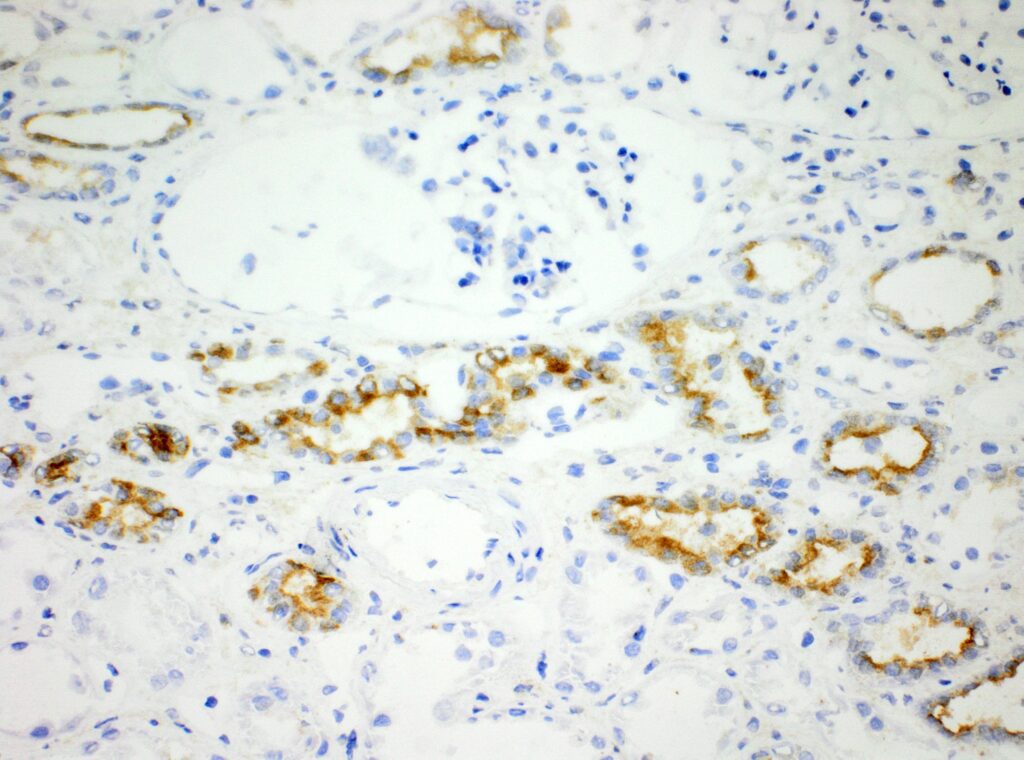
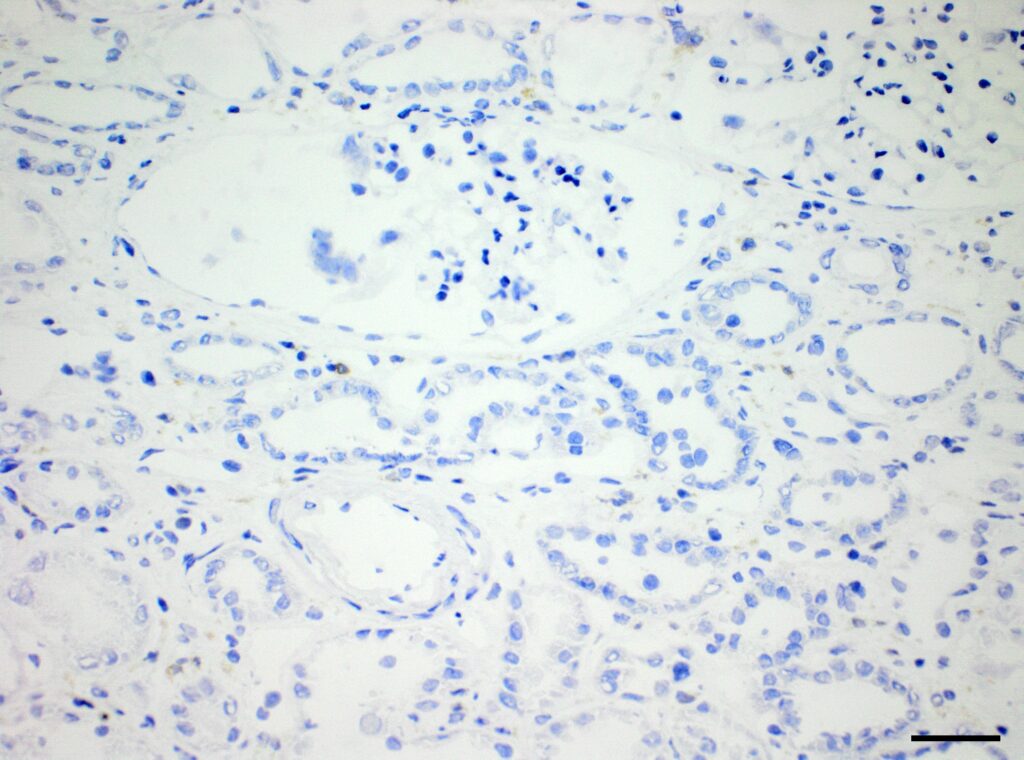
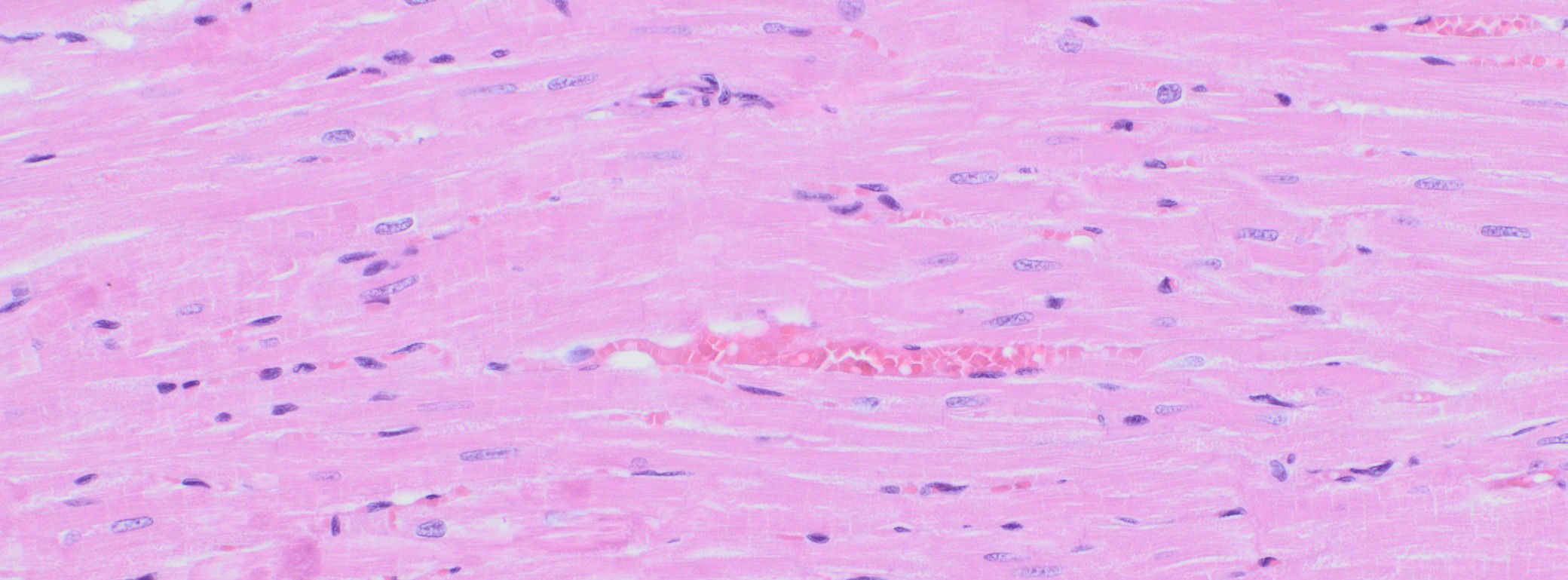
Our team of IHC specialists will validate and establish staining protocols for your required targets on a panel of various species (e.g. mouse, rat, rabbit, monkey, human, cat, guinea pig, frog or dog; see Figures 1-3). Based on our extensive experience with method development we can work out efficient protocols for your markers and conduct studies under GLP and non-GLP.
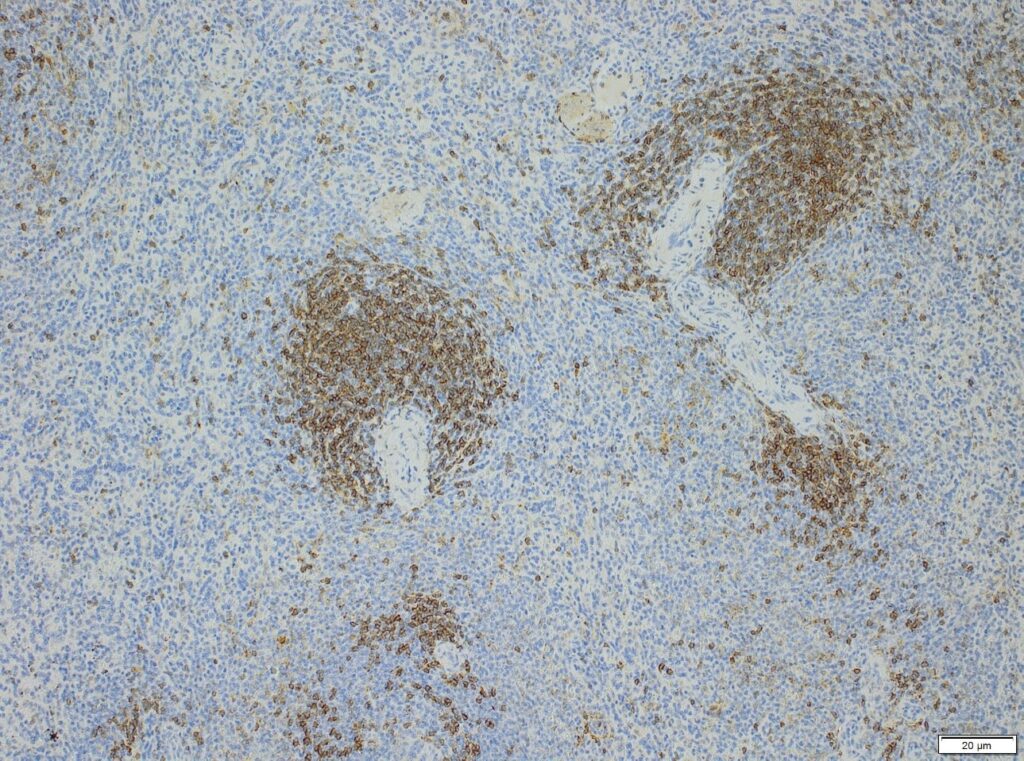
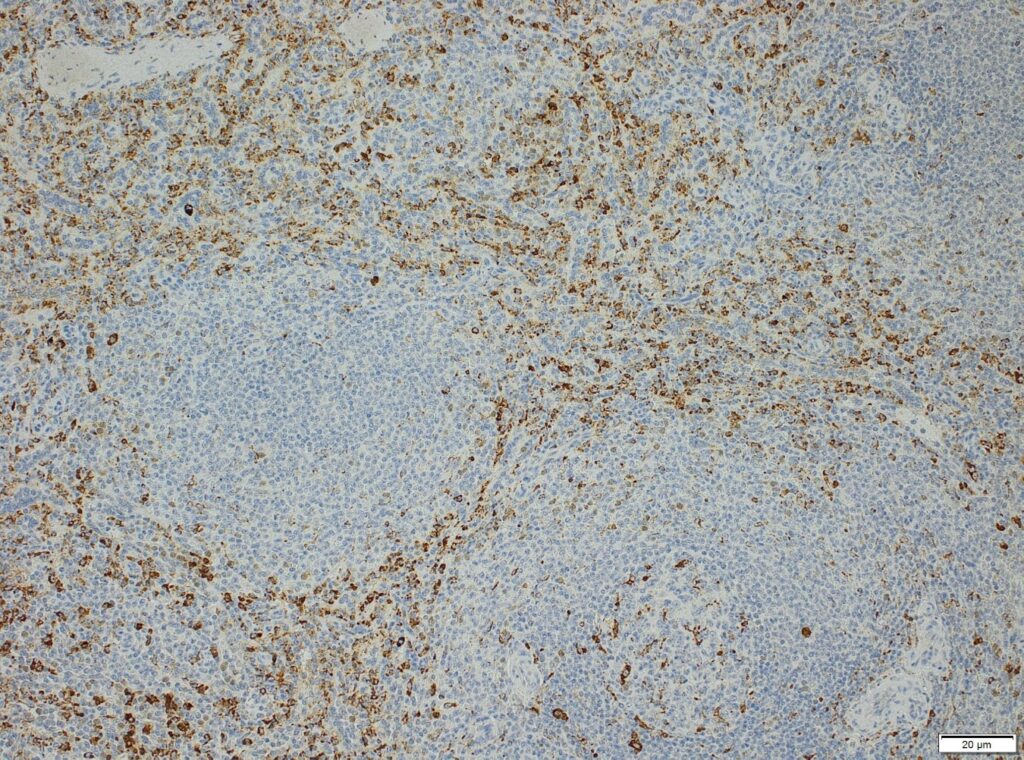
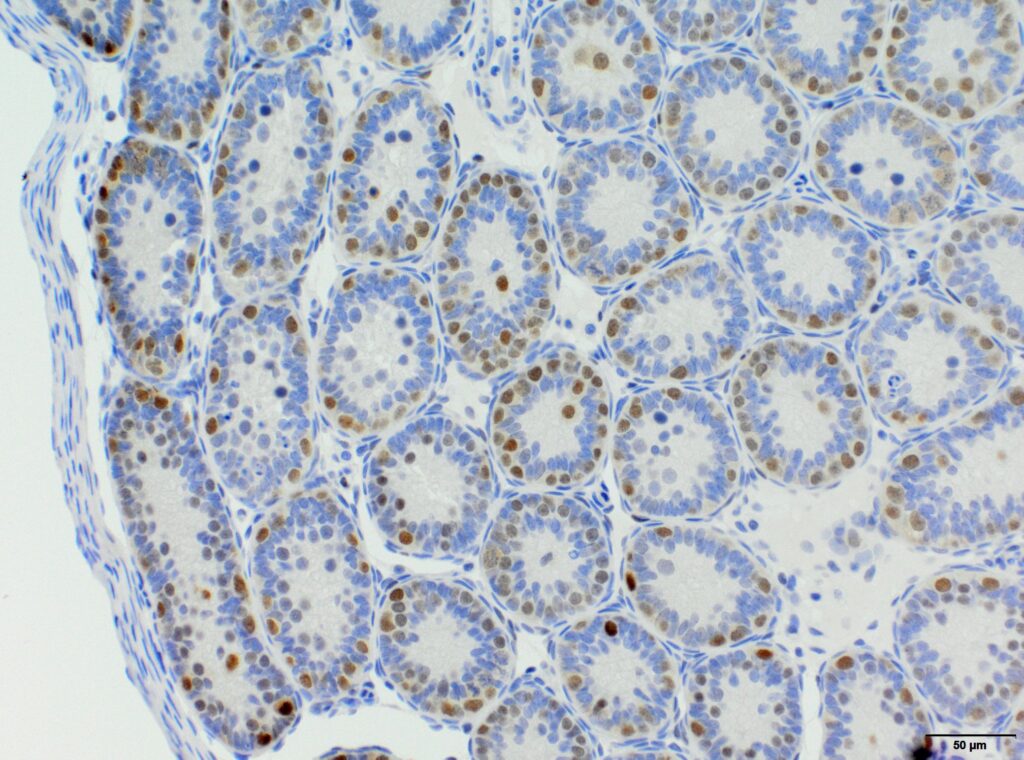
Semi-quantitative evaluation by our board-certified pathologists and quantitative measurements supported by image analysis software tools (e.g. absolute or relative areas, particle analysis, quantification of cell types and structures) will supply you with data of the expected precision. Together we can find the best solution to provide you with an optimal staining result. For further information please contact our team via info@anapath.ch
Immunofluorescence
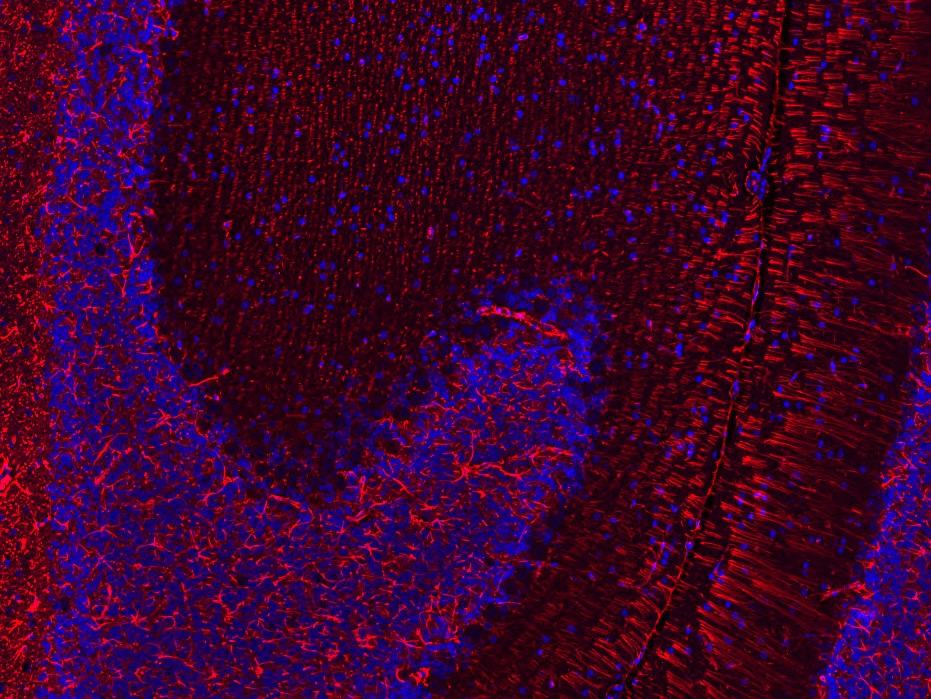
For the analysis of co-expression and colocalization of several targets we recommend the application of multiplex immunofluorescence stainings. This method is especially well suited for the characterization of immune cells and to identify different cell populations within a certain tissue. Our scientists, experienced in immunofluorescence method development, will discuss with you the optimal strategy for your study.
Our company is well equipped with an Olympus VS200 slide scanner, which allows us to scan fluorescent signals of all commonly used labels (DAPI, FITC/GFP, Cy3 and Cy5), and to create the respective overlay scan image (see Figures 4). Please contact our team – specialized in image analysis – to get more information about the further evaluation of these images.
Tissue Cross-Reactivity (TCR) Analysis
AnaPath offers GLP compliant tissue cross-reactivity analysis on human tissue panels following FDA and EMA requirements. TCR screening studies are essential for preclinical safety assessment and marketing authorisation application of monoclonal therapeutic antibodies and antibody-like molecules. In addition, TCR studies on tissue panels of animal organs might help to understand similarities and differences of drug target localization and expression between species and to select the best suited animal model for preclinical studies.
>>> See panels of tissues for different species >>>
Please contact us to discuss in detail the technical options, how to conduct the method development and the TCR study with the test item of your interest in the most appropriate way. Method development and the execution of the TCR main study will be supervised by our scientists, experienced in IHC and with diverse molecules including bispecific antibodies, nanobodies, antibody-cytokine fusion proteins and peptides.
To guarantee tissue panels of highest quality, the tissue integrity of all samples is evaluated by a pathologist before the start of the TCR study. The Leica BOND-III automated staining systems, managed by our experienced technicians, secure reliable and consistent staining results.